
A reverse mortgage gives homeowners aged 62 and older a way to convert home equity into cash without selling the property or making monthly mortgage payments. The loan is repaid only when the borrower dies, sells the home, or moves out. For many California seniors who are equity-rich but cash-limited, that can be a genuine lifeline. But the tradeoffs are real and worth understanding fully before you commit.
Key advantages at a glance:
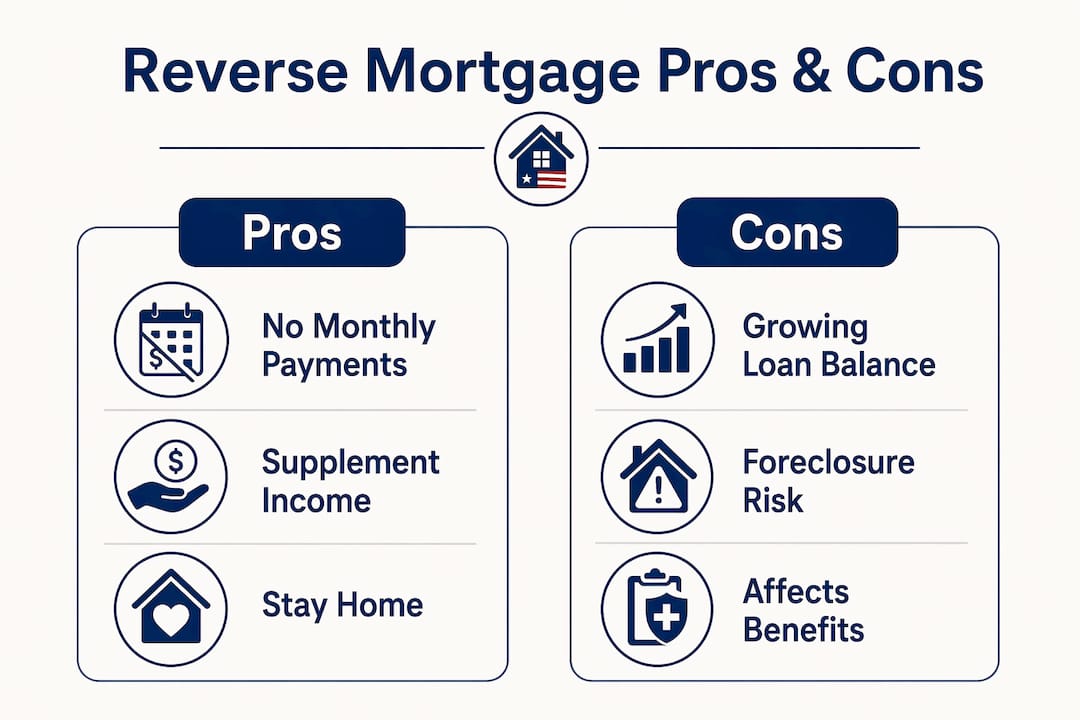
- No monthly mortgage payments required during the loan term
- Flexible payout options: lump sum, line of credit, or monthly advances
- Loan proceeds are generally tax-free
- Non-recourse protection means you never owe more than your home’s value
- Social Security and Medicare benefits are typically unaffected
Key drawbacks to weigh:
- Loan balance grows over time as interest and fees accumulate
- Home equity shrinks, potentially leaving heirs with little or nothing
- Upfront and ongoing costs can be higher than other borrowing options
- Failure to pay property taxes, insurance, or maintain the home can trigger foreclosure
- Medicaid and Supplemental Security Income (SSI) eligibility may be affected
Core conditions to know:
- You must be at least 62 years old and live in the home as your primary residence
- HUD-approved counseling is mandatory before closing on a Home Equity Conversion Mortgage (HECM)
- Repayment is triggered by death, sale, or a 12-month absence from the home
What are the real benefits of a reverse mortgage?
The most immediate benefit is cash flow. Eliminating a monthly mortgage payment frees up money for everyday expenses, healthcare, or home modifications that support aging in place. For California homeowners sitting on decades of appreciated equity, that access can be substantial.
Payout flexibility is another genuine advantage. You can receive funds as a lump sum for a large expense, as a line of credit you draw on when needed, or as fixed monthly advances that supplement Social Security or a pension. The FHA-insured HECM program offers all three options with federal borrower protections built in.
- No monthly mortgage payments: The loan balance is settled when the home is sold or the borrower leaves.
- Tax-free proceeds: Reverse mortgage funds are generally not considered taxable income.
- Non-recourse protection: Lenders cannot pursue repayment beyond the home’s value, so heirs are shielded from personal liability.
- Flexible disbursement: Choose lump sum, monthly payments, a line of credit, or a combination.
- Jumbo options available: Proprietary reverse mortgages can accommodate high-value California properties that exceed HECM lending limits.
- Veteran benefits: Eligible veterans may receive closing cost discounts, reducing upfront expenses.
- Continued homeownership: You retain title to your home throughout the loan term.
One often-overlooked point: in a rising real estate market like much of California, home values can increase faster than the loan balance grows. In those cases, equity may hold steady or even increase despite the borrower drawing funds.
What are the drawbacks and risks you should know?
The loan balance grows every month. Interest and fees are added to the principal, which means the amount owed compounds over time and your equity shrinks accordingly. Heirs may inherit little or face pressure to sell the home quickly to repay the loan, which can create real financial and emotional stress for families.
Upfront costs are another concern. Origination fees, closing costs, and mortgage insurance premiums can make a reverse mortgage more expensive than a home equity loan or a home equity line of credit (HELOC), particularly if you only plan to stay in the home for a few more years.
- Growing loan balance: Interest compounds monthly, steadily reducing the equity available to you or your estate.
- Shrinking inheritance: Heirs may need to sell the home to repay the loan, often within a tight timeframe.
- High upfront costs: Origination fees, appraisal costs, and mortgage insurance premiums add to the total cost of borrowing.
- Foreclosure risk: Failing to maintain property taxes, homeowners insurance, or basic upkeep can trigger foreclosure even without a monthly mortgage payment.
- Limited future options: A reverse mortgage can restrict your ability to take out a HELOC or other home-secured financing later.
- Short-term cost disadvantage: If you move within a few years, the fees paid upfront may outweigh the benefits received.
A note on foreclosure risk: Many seniors are surprised to learn that a reverse mortgage can still lead to foreclosure. The trigger is not a missed mortgage payment. It is unpaid property taxes, lapsed homeowners insurance, or a home that falls into disrepair.
How does a reverse mortgage affect your government benefits?
Reverse mortgage proceeds do not reduce Social Security or Medicare benefits. The funds are treated as loan advances, not income, so they do not count toward the income thresholds that govern those programs. For most California seniors, this is straightforward good news.
Medicaid and SSI are a different story. Both programs have asset limits, and if you receive reverse mortgage funds and do not spend them within the same calendar month, the unspent balance may count as a resource. That could push you over the eligibility threshold and temporarily disqualify you from benefits.
- Social Security: Unaffected by reverse mortgage proceeds.
- Medicare: Unaffected, regardless of how funds are used.
- Medicaid: Proceeds held beyond the month received may count as assets, potentially affecting eligibility.
- SSI: Same risk as Medicaid. Unspent funds in a given month can jeopardize eligibility.
- Spend-down strategy: Spending proceeds in the same month you receive them generally avoids asset-limit issues for Medicaid and SSI.
- Benefits counselor: Consulting a benefits specialist before proceeding is the most reliable way to protect your eligibility.
The safest approach is to speak with a HUD-approved housing counselor and, if you receive Medicaid or SSI, a benefits counselor who understands how loan proceeds interact with those specific programs.

What are the eligibility requirements and counseling steps?
To qualify for a HECM, you must be at least 62 years old, occupy the home as your primary residence, and hold significant equity in the property. Any existing mortgage balance must be paid off at or before closing, typically using a portion of the reverse mortgage proceeds.
HUD-approved counseling is not optional. Before closing, every HECM applicant must complete a session with an independent, government-approved housing counseling agency. That session covers costs, financial implications, repayment scenarios, and alternatives, giving you an unbiased picture before you sign anything.
- Age: Must be 62 or older (all borrowers on title must meet this requirement).
- Primary residence: The home must be your main residence, not a vacation or investment property.
- Equity: Substantial equity is required; the exact amount depends on your age, home value, and current interest rates.
- Property types: Single-family homes, HUD-approved condominiums, and some manufactured homes qualify.
- HUD counseling: Mandatory for HECM loans; some proprietary lenders also require it.
- Financial assessment: Lenders review income, credit history, and your ability to cover ongoing property obligations.
- Appraisal: A professional home appraisal determines the property’s current market value, which sets the borrowing limit.
Proprietary or jumbo reverse mortgages follow lender-specific guidelines and may allow borrowing on higher-value properties that exceed HECM limits, which is particularly relevant for California homeowners with homes valued well above the national median.

Expert guidance on when a reverse mortgage makes sense
Financial experts and the Federal Trade Commission consistently frame reverse mortgages as a last-resort tool, best suited for seniors who are cash-poor and equity-rich with no better alternatives. That framing is not a condemnation. It is a reminder that less expensive options, such as a HELOC, a home equity loan, or downsizing, should be evaluated first.
A reverse mortgage tends to make the most sense when you plan to stay in the home long-term, have no heirs who depend on inheriting the property, and need reliable income or a financial cushion that other sources cannot provide.
- Good fit: Long-term residents with no plans to move, limited retirement income, and no heirs counting on the home.
- Poor fit: Seniors planning to relocate within a few years, those with Medicaid dependency, or those whose heirs need the property.
- Alternatives to consider: HELOCs, home equity loans, refinancing, or selling and downsizing.
- Estate planning: Discuss the loan’s impact on your estate with an attorney before proceeding.
- Avoid sales pressure: Walk away from any lender who rushes you or bundles the reverse mortgage with annuities or insurance products.
Pro Tip: Set up automatic payments for property taxes and homeowners insurance from the start. Missing either one is the most common reason reverse mortgage borrowers face foreclosure, and automation removes the risk entirely.
Explore your loan options carefully before deciding. A reverse mortgage is one tool among many, and the right choice depends on your full financial picture.
Key Takeaways
A reverse mortgage can provide real financial relief for equity-rich seniors, but the growing loan balance, foreclosure risk, and impact on heirs make it a decision that requires careful, informed planning.
| Point | Details |
|---|---|
| No monthly payments required | The loan is repaid only when you sell, move out, or pass away. |
| Loan balance grows over time | Interest and fees compound monthly, reducing your equity and potential inheritance. |
| Government benefits vary | Social Security and Medicare are unaffected; Medicaid and SSI may be impacted by unspent proceeds. |
| HUD counseling is mandatory | HECM applicants must complete a session with a HUD-approved counselor before closing. |
| Best for long-term residents | Reverse mortgages carry high upfront costs that favor borrowers who plan to stay in the home for many years. |
Ready to explore whether a reverse mortgage or another home equity solution fits your situation? Amerifilending works with California homeowners to find lending solutions that match your goals, your timeline, and your family’s needs.